Self-Healing Agents and the End of the Prompt Monkey Era
Jay Long
Software Engineer & Founder
Published
The Agents Fixed Themselves
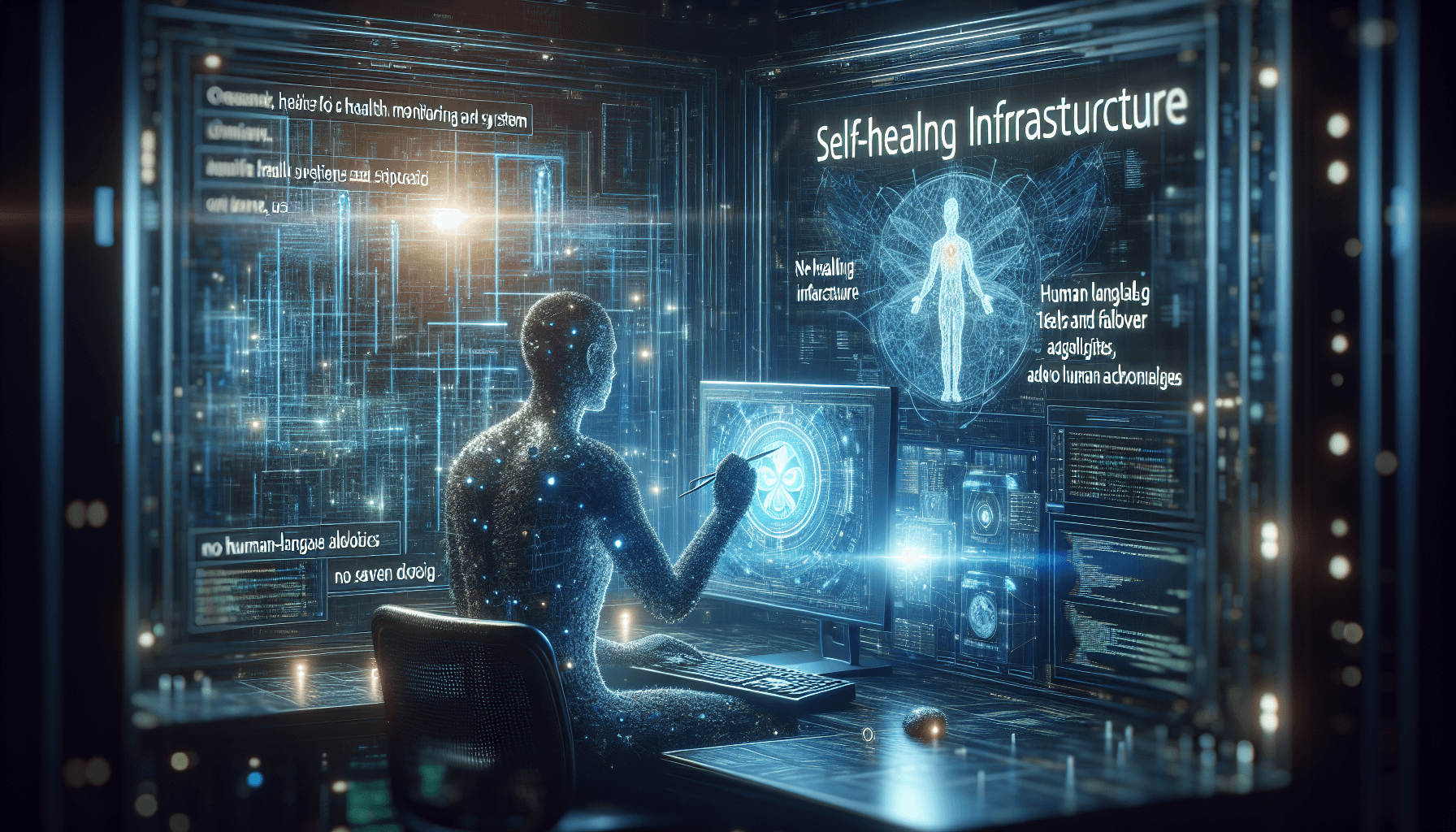
We had an incident yesterday. An authentication issue took down some services, and in response I added some advanced health checks to the GusClaw Observatory. Things that verify authentication status on critical services. What happened next was wild. The system just went out and proactively built an entire health monitoring dashboard. I can now view the health of every service that depends on authentication, in real time.
Then we added a failover. It doesn't just alert me that we've lost authentication. It falls back to the API key automatically so the service stays up while I come back and re-authenticate. Manual authentication at this point is more of a minor cost savings measure than an actual availability risk. That's a huge shift from where we were 24 hours ago.
Why Separate Operational from Productive?
What we did was separate all agents and their tasks into two distinct categories: operational and productive. Productive services are token-intensive. These are the coding agents, the ones building out entire features, making revisions, doing bug fixes. We can tolerate those being down because I can always catch up on coding work later in the evening.
Operational services are different. Communication services, chat APIs, routine automated tasks like SEO scans. They're not very token-intensive, but if they go down, I lose real productivity for the day. If my SEO pipeline goes down and I miss optimizations we could have shipped, I don't even know what to do later. I'd have to go back and rerun the full scan, and the cost of running it on the API key is minimal anyway.
So operational services get the API key failover. They stay up no matter what. Productive services wait for me to come re-authenticate. It's a good idea to separate your service types and have redundancy in your authentication so the whole system can be fault tolerant.
Pipeline Observability and the Mock Data Approval Flow
I also added deeper observability into the pipeline. There's now a dedicated page that follows pipeline progress. It captures when pipelines trigger and monitors them step by step. It's basically Innate-style stuff, only it's my custom infrastructure that my agents manage, not some no-code dashboard I fumble through with my human fingers clicking and typing on things.
We also implemented a feature where my agents proactively add things to the dashboard and connect them to mock data for safety. I can review everything before we go live. Some of the features I'm looking at right now are things my agents went out and built, plugged up to mock data, then showed me in the morning standup for approval. Approval just means we hook it up to live data instead of the mock. The thing is already built. That's unreal.
Plucking an Expert from the Ether
I went real hard on the CyberWorld landing site. We added a bunch of service pages and did a full homepage redesign. While I was working with Claude Code, I realized it would be nice to pull in a different perspective, someone who specializes in front-end design. I've got front-end developer skills loaded and they've been working tremendously. The agent really understands the Next.js framework. It knows the lingo, the patterns, the constructs, the architecture. I don't have to waste time hand-holding through it like I used to. It's actually teaching me things about Next.js that I didn't know. I'm becoming a better developer by engaging this thing.
But then I started getting this Spidey sense. There's stuff I know I don't know about design, and I started sensing unknown unknowns. I wished I had an expert who could come in for just a few minutes. Then I stopped and thought, wait. We added the developer skill, but we never added the design skill. So I told Claude Code to go find design skills and give me a second opinion on what we were doing.
It was like hiring somebody on the spot. An expert in front-end design just appeared. I learned new terms. I learned specific definitions of things I thought I understood but didn't fully. And it was free. I just plucked it from the trees, man. I pulled it from the ether.
The lesson is simple: if you ever doubt yourself on something, look for a skill. You never know what's out there. Ask yourself what kind of person you'd hire, and then check for the skill first. We also have a system that crawls the Claude Code docs and the OpenClaw project to keep updating our ability to improve and test skills against the latest models. The whole skill validation process has gone through multiple evolutions already. Things are iterating that fast. You have an idea one day, and the next day it's executed and sending results.
Am I Just a Prompt Monkey?
None of this stuff existed before. All the things I'm creating and shipping didn't exist, and then AI enters the picture and suddenly it does. So naturally my first instinct is: am I actually creating something, or am I just another basic prompt monkey spreading the volume of AI slop across the internet?
I've been going back through my blog posts and reviewing everything that's launched on the site. It really does feel like it's got my personality baked into it. The vast majority of this content comes out of voice memos that I'm recording. I read through all of it and these are things I said. Most of the changes the pipeline makes are capitalizing the first letter, putting a period at the end of a sentence, fixing grammar. It's not rewriting my words. These are my words.
I always had a lot to say. It was always so time-consuming to present it in a way that looked clean and professional, and it was always so expensive to hire someone to help. Now it's like all this creativity and productivity was bottled up, and it's been released. It's not replacing me. It's empowering me. This is my voice that has been chained for years, just chipping away at a monolithic gate that felt impenetrable. Now the ramparts are laid bare and the gate is flung wide open, and my army of thoughts and dreams are marching into this world finally.
What's Next
I think it's time to rethink how we do chatbots. I'm done with the basic chatbot user experience. The intelligence is already there. I've built the architecture, I've baked in the intelligence. It deserves better than some basic chat widget on a web page. We're going to do some really cool stuff with it. You're not even going to know it's a chatbot until you've seen a glimmer of its intelligence, and by the time you're chatting with it, you'll already know it's not just another chat box.
I also need to set up a VPN so I can work on this thing remotely. There's a lot I can do through the Telegram chat, but I've put so many guardrails on it for security that it's hard to be deeply productive. I share ideas through Telegram and by the time I get back to my desk, the system is already suggesting things and building things. That's already productive. But there's something about locking in directly with Claude Code as a human developer. We make so much more progress in that direct mind meld, with Cursor IDE open, reviewing code changes in real time, making edits. That's still unmatched for higher reasoning tasks and complex work.
The days of being a code monkey are a bygone era. It's a horse pulling a cart at this point. I'm proud of the war story, but I'm not going to miss it. And this is coming from a guy that still likes to listen to vinyl records.
I hope a lot of other people out there are having a similar experience, because this has the potential to be extremely liberating. Don't get crippled by fear. Find something amazing and productive and inspiring to do. Figure out your money situation and find a way to monetize it. But if you can have that breakthrough, we're all turning the tables on a long period of oppressive debt slavery. I don't think we're going to realize how bad it was until we're looking back at it in the rearview. But let's keep going. I feel fortunate to be alive during these times.