The GusClaw Observatory: Watching My AI Team Work
Jay Long
Software Engineer & Founder
Published
The Observatory Is Live
I've mentioned the GusClaw Observatory before. There was a brief early version deployed a while back. Now it's fully featured, and it's reached a level of maturity where I'm actually going to use it today to observe real activity across my agentic team.
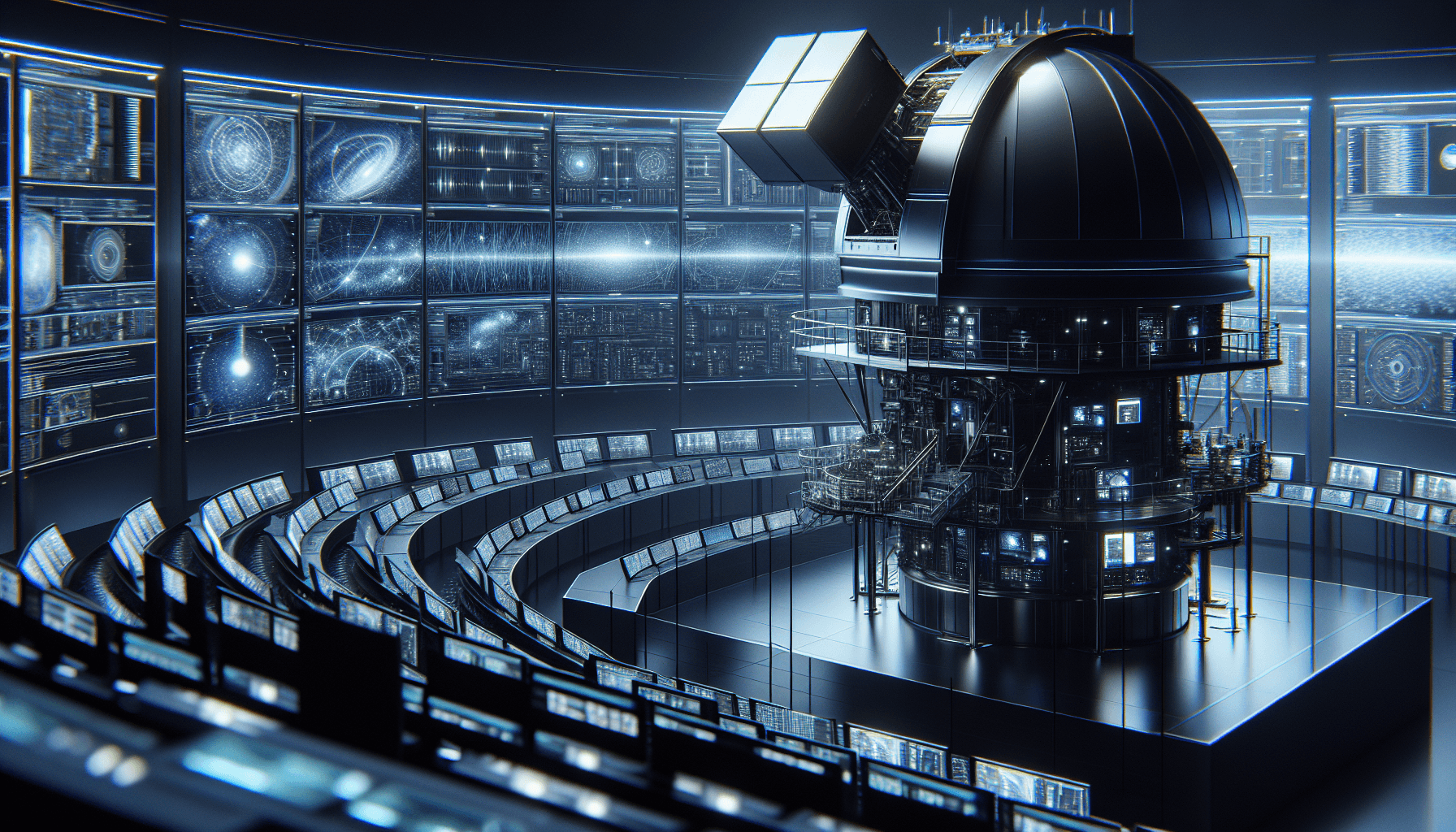
The GusClaw Observatory is a web-based graphical interface that runs on my GusClaw machine. It connects to all of my agents via WebSockets, gives me real-time monitoring, and lets me watch everything my AI team is doing from one place. Think of it like a security surveillance system, except instead of seeing humans at desks drinking coffee, I see command terminals streaming standard out and standard error logs for whatever each agent is working on.
But to really explain the Observatory, I need to explain what GusClaw actually is. And that requires a bit of history.
What Is GusClaw?
GusClaw is the environment that powers my personal AI assistant, Gus. You might say it's a rip of OpenClaw. And it is. But it's also this thing that lives in the space between Claude Code and OpenClaw, and that positioning is actually kind of beautiful.
I started using OpenClaw, then got a Claude Code Max subscription, and shortly after that, Anthropic pretty much killed the usage of Claude Code within OpenClaw. I already had the subscription. I go into way more detail about this in my article on my first seven weeks with Claude Code, so check that out for the full backstory. The short version is that I cloned the OpenClaw repository and replaced the model system with Claude Code. There were a lot of other customizations on top of that, but that swap is the one that matters here.
Where I landed is this in-between space. GusClaw is its own thing. We maintain it ourselves. And the obvious question is: is this practical to keep up? Should we just pick a lane?
We had a long conversation about this and put measures in place to track it. When you actually compare the two products, they're striving to solve completely different problems. Claude Code is developer-focused. OpenClaw is trying to present something for production, for non-developers. There's a ton of overlap since OpenClaw was built on top of Claude Code, but the goals are different. The OpenClaw memory system, for example, is a massive iteration over the Claude Code memory system. Same with the skill system.
Why Not Just Pick One?
Because we don't want parity with either solution. That's actually the whole point.
GusClaw is both a powerful development tool that I use as a developer and a production-ready AI assistant platform used in real client-facing services. Going all in one direction means keeping parity with that solution but losing the ability to cherry-pick the best of both worlds. There's no real value in full parity with either one, as long as we can quickly and effectively grab the features we need. And we can. In minutes.
OpenClaw is open source, so we can see the entire codebase. Claude Code is closed source, but all the skills are raw markdown files, so those are effectively open source. Between the readable skills, the open source OpenClaw code, and the documentation and community usage for both products, we have everything we need. I've got an automated process that keeps the OpenClaw repository cloned right next to the GusClaw codebase on the same machine, alongside all my Claude Code skills. Every so often, we pull the latest changes, run a web search for Claude Code updates, and prepare an analysis report. Then we cherry-pick.
Every time we run this analysis, we ask ourselves: are they getting so deep into a feature that we're missing out by not going all in? So far, the answer has been no. That whole "you can just do things" motto applies here. We can just do this.
For example, Claude Code just put out a huge upgrade to their skill system. The skill creator skill now writes test coverage for every skill it builds and benchmarks itself against the raw model to catch when a skill becomes obsolete because the model has gotten better. We've incorporated both of those. The OpenClaw project moves so fast that as soon as Anthropic does something, they reverse-engineer and emulate it. They're doing what I'm doing in their own ecosystem. So for the most part, I can achieve what I care about just through watching OpenClaw. And if Anthropic releases something I really care about that OpenClaw hasn't prioritized, I can go build it myself and have it in GusClaw by the end of the day.
It's crazy to be able to say that. It was never practical to try to keep up with these companies. It was reaching a point where it was stupid to even waste time thinking about it. Now I can do it with ease and not even be worried about falling behind. I've automated measures to flag when we might be headed toward a situation where I should just pick one and go all in. That day hasn't come.
What Does the Observatory Actually Look Like?
The Observatory draws some inspiration from the OpenClaw gateway application in principle, but visually and in terms of user experience, it's its own thing. It's a web interface with WebSocket connections to all of my agents, running over SSL across the LAN to the GusClaw machine. I still need to add VPN access so I can reach it remotely, but on the local network it's fully encrypted and running.
The home route has summary widgets showing what my scheduler looks like: what workflows and pipelines have recently run, what's scheduled to run next, and whether anything is currently in progress. Each agent has its own widget with the agent's name, a little icon representing it, a description of what it's for, blinking indicator lights for its status, and then the actual status written out. The style is kind of like a warehouse security system. It fits the company aesthetic.
The logs from each agent stream in real time through the WebSocket connection. You can see them running on the dashboard. If you squint, you can read them right there in the compact view. Click on any agent and it expands to the full detail page with a complete breakdown of everything that agent is doing, plus links to every workflow it's involved in.
There's a workflow page where you can view any pipeline with a node-based visual representation. Every node is an agent with a task. Click any node and it links straight to that agent's detail page. You can flip back and forth between agents and their workflows. The dashboard also has compact versions of all agent statuses so you can see everything at once and zoom in by stages.
I keep this running on my desk. I've seen people in the community build these 3D game-like avatar systems for their agents, which is kind of cool, but I didn't see the value. Just show me the terminal. Show me the output. Let's get straight to the point. Right now it's read-only. I haven't decided whether to turn it into a command center where you can issue commands to agents, or keep it purely as an observatory. That decision is still open.
The Freelancer's AI Advantage
These are equally exciting and scary times. It's looking more and more like you can just do whatever you want. At the same time, any skill you learn to market can go to dust at any given moment. A client can come in any week and say, hey, we found we don't need you for this anymore, thanks, good luck. And I'm doing the same thing on my end, nuking SaaS products left and right when they stop being worth the cost.
But here's where my career choices are paying off. A lot of people I know went all in on enterprise security. They out-competed me by being willing to take less freedom, less money, in exchange for stability. And I was like, nah. I'll compete on capabilities, on what I can do and learn and build, but I'm not sacrificing autonomy and flexibility and the excitement of working with startups.
That was probably irresponsible given how many kids I have and how many people depend on me. But I did it. And now I'm in a better position than a lot of those people, because even at my most enterprisey, when I was working with compliance-bound clients and high-availability systems and large teams, I always maintained a solid base of startup clients. Small teams, bootstrapping apps, working with the latest tech.
And guess what? AI is always the newest tech. While other teams were under compliance lockdowns where GPT was a bad word and Cursor was a bad word, where even uttering those names meant you didn't care about security, I was building greenfield products with founders who didn't have a validated product yet. We used all the AI. We went all in. I used Cursor, GPT, Claude Code, everything. I didn't care what anybody thought.
Now that these tools have matured, I already know what you can and can't do with Cursor, Claude Code, GPT, Grok, Perplexity. This is my wheelhouse. For better or worse, whether it was responsible or not, it's the choice I made. And this is the moment when it's paying off, when other people are struggling to demonstrate relevance and authority with AI, ironically using AI to generate articles about AI. For me, it's native.
How Do I Turn This Into Revenue?
My biggest bottleneck right now is matching skills and abilities with clients who are looking to spend money on services like mine. I'm doing better every week in terms of money, clients, and new leads. But it doesn't seem to be anywhere close to the power of the tools and abilities I'm working with. I think we could easily 10x the income if we found the right marketing communication.
We've got daily standups now, and part of that conversation is marketing: taking all the research from the community, the tech trends we've spotted, everything I've blogged about, and synthesizing it into how do we package this up and present it to the market. What I'll probably do soon is take a lot of what I've been building for my own company and spend time packaging and marketing those capabilities.
I've found it exciting and exhilarating to just be as open as possible about what I'm working on. I feel like I'm on the verge of a breakthrough moment where my rate of innovation is reaching parity with my rate of dreaming. That has actually unlocked new dreaming capabilities. New dreams that come to life the same day I have them.
Anthropic is kind of funneling you into learning how to automate things by giving you so much quota with Claude Code, but capping you at a certain point to force you to share it with others. That's where I'm headed with my strategy: push myself to achieve, prove what's possible, and then share the playbook. Flex the capabilities, but also share the marketing strategy, what's working, what's not, how I'm evolving and adapting. Because what's the point of living in a society where you're one of a handful of winners and millions of people are in breadlines hoping your benevolence gives them a decent quality of life?
The Bigger Picture
I would rather live in a society with maximum autonomy. America's got problems you could criticize all day long, but the amount of people that capitalism and this country have lifted out of poverty is something we should always be proud of. We can do better, though. We can use AI to lift even more people. We shouldn't be trying to tear America down. We should be trying to iterate on it.
When our kids grow up, we should be able to look back and say: look how many people we brought into the next level of autonomy, the next level of freedom. And there are going to be battles with bad actors along the way. That's partly why my son has an interest in cybersecurity and I'm trying to take him under my wing, get him doing pen tests for our company, making sure our security game is locked down. Because we can share that knowledge too.
Your AR-15 isn't going to do anything against mass surveillance and autonomous weapon systems. You might as well be chucking a spear. But you know what you can do? Get on your cyber game and automate your own security bots to help combat surveillance and potentially take down autonomous threats. That's the spirit of the Second Amendment adapted for the age we actually live in.
So yeah, we're all just trying to hang on and pay our bills while we see what the future holds. I feel like I'm approaching a moment where I'm soaring at increasing velocity. And I'd rather bring as many people along as I can than sit at the top alone.